Day Nineteen: Pretty interesting - use one of the seashell names here as inspiration for a poem. The one I picked is in the title. Seems like a pretty ridiculous name for a seashell, which, I think, is why I like it so much.
It isn't snowing anymore,
but the cold still creeps in
through the windows,
especially the ones that have
been in need of new insulation
for the past several holidays.
We can feel it prickling our skin,
drifting through our pores and then
pulling them out so our arms
look like vast, dune-pocked beaches.
The meal rests anxiously on the table,
calling quietly out to our eyes.
We're lucky in this family,
to be so unconcerned, so nontrivial,
to have an understanding and
a firm grip on what stands tallest.
No desire to fly away, not now -
hunger motivates too strongly.
_________________________________________________
Quick Links and such.
Randomly found this excellent poem by Mark Cugini.
Zach has kept it going in this very honest short poem.
And this excellent one - he's good, folks.
Leonard wrote another good one, as well.
_________________________________________________
Playing on my iTunes at this very moment:
Shad, Stylin'

Showing posts with label Quick Links. Show all posts
Showing posts with label Quick Links. Show all posts
Saturday, April 19, 2014

Monday, April 14, 2014
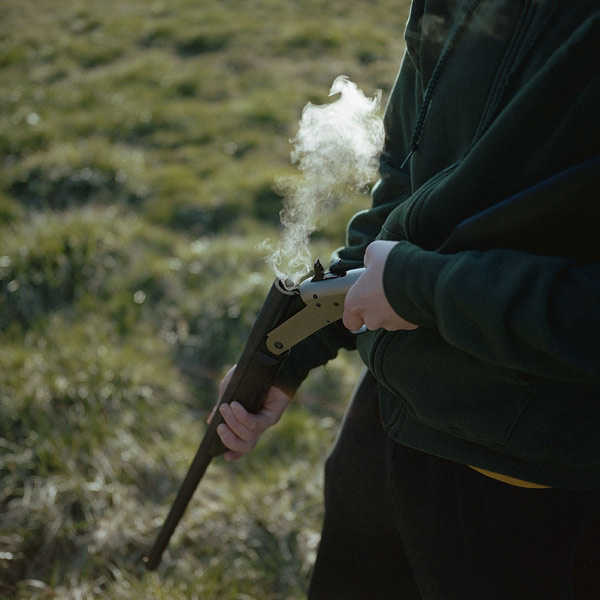
Counterpoints, ten paces, dawn
Day Fourteen: Another self-appointed picture prompt.
There's a blank stare across the field,
drilled deep and left as a cavity, black
pits or something else just as ominous.
She brought him here for a reason,
and as of yet he is still too afraid to ask,
what will signal the depth of her anger?
Their silence has remained vast, unbroken,
yards of quiet, empty space between them
and an ocean of usable air - it has become
a question of, who will take advantage first?
Now that the requisite number of paces
has been reached, and the fog has lifted
from the frozen, crunching grass beneath
their feet, whose gunshot will ring loudest?
_________________________________________________
Quick Links, NaPoWriMo edition.
Zach - you killed it with this one, my friend.
An amusing noun-switch poem from Leonard.
_________________________________________________
Playing on my iTunes at this very moment:
Two Door Cinema Club, Something Good Can Work
 |
| photo by Tom Hoying |
drilled deep and left as a cavity, black
pits or something else just as ominous.
She brought him here for a reason,
and as of yet he is still too afraid to ask,
what will signal the depth of her anger?
Their silence has remained vast, unbroken,
yards of quiet, empty space between them
and an ocean of usable air - it has become
a question of, who will take advantage first?
Now that the requisite number of paces
has been reached, and the fog has lifted
from the frozen, crunching grass beneath
their feet, whose gunshot will ring loudest?
_________________________________________________
Quick Links, NaPoWriMo edition.
Zach - you killed it with this one, my friend.
An amusing noun-switch poem from Leonard.
_________________________________________________
Playing on my iTunes at this very moment:
Two Door Cinema Club, Something Good Can Work
Wednesday, April 2, 2014
The death of the Hound of Ulster
Day Two: Write a poem based on myth - but not Greek or Roman. I chose Cúchulainn, a hero of Irish mythology.
Conspirators abound, and their history
ties their black hearts together.
But who could blame them? Stories say
that the object of their vengeance
has no heart at all - they say he is
the embodiment of hell itself,
of a nature so driven by bloodlust
that his frenzy renders him a monster,
an artist of violence and rage.
Wood is tipped with iron, and each
is thrown with furious adrenaline,
born in the hatred of a pained heart.
The raven flies overhead, and observes
the advance of death upon the warrior,
a man alone at the fall - and when he
ties himself standing, the only honor left,
the blight of a bird alights on him,
and his enemies know he is truly dead.
_________________________________________________
Quick Links - to poetry, of course.
Leonard P. Wilson has jumped on the NaPoWriMo train, as well.
Zach has another excellent short poem.
_________________________________________________
Playing on my iTunes at this very moment:
Bombay Bicycle Club, Ivory & Gold
Conspirators abound, and their history
ties their black hearts together.
But who could blame them? Stories say
that the object of their vengeance
has no heart at all - they say he is
the embodiment of hell itself,
of a nature so driven by bloodlust
that his frenzy renders him a monster,
an artist of violence and rage.
Wood is tipped with iron, and each
is thrown with furious adrenaline,
born in the hatred of a pained heart.
The raven flies overhead, and observes
the advance of death upon the warrior,
a man alone at the fall - and when he
ties himself standing, the only honor left,
the blight of a bird alights on him,
and his enemies know he is truly dead.
_________________________________________________
Quick Links - to poetry, of course.
Leonard P. Wilson has jumped on the NaPoWriMo train, as well.
Zach has another excellent short poem.
_________________________________________________
Playing on my iTunes at this very moment:
Bombay Bicycle Club, Ivory & Gold
Thursday, November 14, 2013
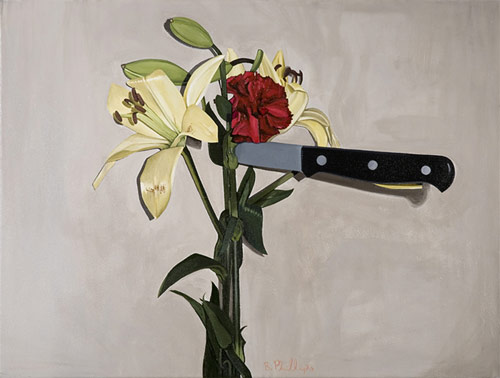
On flights of arrows, sharper than we'd been led to believe
 |
| painting by Brad Phillips |
car crash, but a natural
disaster - you seep
into my brain and
poison all the ground,
and when poured into
the form of a cigarette,
you would be sweeter
than nicotine, but
just as cancerous.
_________________________________________________
From the most recent decomP, an excellent poem from Will Arbery.
And here, my friend Zach absolutely kills it.
_________________________________________________
Playing on my iTunes at this very moment:
Skyzoo, The Definitive Prayer
Wednesday, October 16, 2013
The Old South
Time has been melting,
just as Dali painted it,
and somehow our customs
have maintained solidity.
Our surroundings, though,
are no less surreal,
and we decry change
every day - in large groups.
It's the lure of new culture,
the destructive urge
to progress, to make new,
to fix what isn't broken.
We are the opposite
of amorphous, like
how the Spaniard made
an angular, metallic Newton.
Unlike the scientist, though,
no holes in our head,
no holes in our chest,
nowhere for tolerance
to filter through and grow.
So we've built anew
the Old South, as current
in the 21st as in the 19th.
_________________________________________________
Quite a story from Emma Smith-Stevens on Wigleaf.
Another from Wigleaf - Edward Mullany writes a great short.
Leonard P. Wilson is productive, lately. This one is especially good.
_________________________________________________
Playing on my iTunes at this very moment:
Shad, Remember to Remember
just as Dali painted it,
and somehow our customs
have maintained solidity.
Our surroundings, though,
are no less surreal,
and we decry change
every day - in large groups.
It's the lure of new culture,
the destructive urge
to progress, to make new,
to fix what isn't broken.
We are the opposite
of amorphous, like
how the Spaniard made
an angular, metallic Newton.
Unlike the scientist, though,
no holes in our head,
no holes in our chest,
nowhere for tolerance
to filter through and grow.
So we've built anew
the Old South, as current
in the 21st as in the 19th.
_________________________________________________
Quite a story from Emma Smith-Stevens on Wigleaf.
Another from Wigleaf - Edward Mullany writes a great short.
Leonard P. Wilson is productive, lately. This one is especially good.
_________________________________________________
Playing on my iTunes at this very moment:
Shad, Remember to Remember
Wednesday, August 14, 2013
The dark heart
The trees speak loudest
in the early morning,
when thirsts are quenched
and the years pour out -
just weddings and moods
stretched in rippling order.
At night, all becomes tribal
and they dance a strange,
disorderly melody, motionless
as they rend the blazing air.
The seams of the universe
come apart, portals open
in streaks of cold, yellow fire.
It's all cold from this far away.
It's all just wishes, make believe.
_________________________________________________
Been reading lots of good things lately:
From the first issue of Cloud Rodeo, two poems from Quinn White.
Elizabeth McMunn-Tetangco nailed it in the newest issue of decomP.
My friend Zach is doing good things - this is one of them.
_________________________________________________
Playing on my iTunes at this very moment:
OK Go, White Knuckles
in the early morning,
when thirsts are quenched
and the years pour out -
just weddings and moods
stretched in rippling order.
At night, all becomes tribal
and they dance a strange,
disorderly melody, motionless
as they rend the blazing air.
The seams of the universe
come apart, portals open
in streaks of cold, yellow fire.
It's all cold from this far away.
It's all just wishes, make believe.
_________________________________________________
Been reading lots of good things lately:
From the first issue of Cloud Rodeo, two poems from Quinn White.
Elizabeth McMunn-Tetangco nailed it in the newest issue of decomP.
My friend Zach is doing good things - this is one of them.
_________________________________________________
Playing on my iTunes at this very moment:
OK Go, White Knuckles
Saturday, August 25, 2012
Wrong directions
Granted, it wasn't the best plan.
I've not been the "decent man"
kept behind shatterproof glass.
I've not been the busy executive
lost at air and sea and suite 1028.
But I've done my time away,
a stain that will never wash out,
beneath a rusted, dangling sign
that should (maybe) light up.
Despite the few extra miles,
I think you'll prefer the route.
_________________________________________________
From the newest edition of Thrush:
Sometimes the Blood Goes Cold, by Stephanie Bryant Anderson
Comparing Mythologies in Paris, by Jane Rosenberg LaForge
_________________________________________________
Playing on my iTunes at this very moment:
Cage The Elephant, Japanese Buffalo
I've not been the "decent man"
kept behind shatterproof glass.
I've not been the busy executive
lost at air and sea and suite 1028.
But I've done my time away,
a stain that will never wash out,
beneath a rusted, dangling sign
that should (maybe) light up.
Despite the few extra miles,
I think you'll prefer the route.
_________________________________________________
From the newest edition of Thrush:
Sometimes the Blood Goes Cold, by Stephanie Bryant Anderson
Comparing Mythologies in Paris, by Jane Rosenberg LaForge
_________________________________________________
Playing on my iTunes at this very moment:
Cage The Elephant, Japanese Buffalo
Saturday, August 18, 2012
Dendrology
We are the tiniest of branches
that are lucky enough to be born
in the final urgent inches
of an elderly oak tree's
upward, straining reach.
Even when the temperature drops,
and we are most vulnerable,
we'll still be reaching for something.
_________________________________________________
Also, read these things. They're pretty good.
How It Ended, by Liana Holmberg (from decomP)
Drawn To Scale, by Sean McCleary (from the stoneslide corrective)
_________________________________________________
Playing on my iTunes at this very moment:
Bon Iver, Perth
that are lucky enough to be born
in the final urgent inches
of an elderly oak tree's
upward, straining reach.
Even when the temperature drops,
and we are most vulnerable,
we'll still be reaching for something.
_________________________________________________
Also, read these things. They're pretty good.
How It Ended, by Liana Holmberg (from decomP)
Drawn To Scale, by Sean McCleary (from the stoneslide corrective)
_________________________________________________
Playing on my iTunes at this very moment:
Bon Iver, Perth
Thursday, October 20, 2011
Flyby
Really enjoying this Three Word Wednesday thing so far...but late on this one. That's what happens when the World Series is on. The words for this week are breach, ember and tentative.
_________________________________________________
Tones dance across the auditory cortex,
steps tentatively taken at first,
then gripped by passion
and shoved hastily forward.
A split-second to recognize
and another to react -
a shifting of cooling embers
stirs just enough in the breach
and fire is lit;
adrenaline flows warm
and comforting.
_________________________________________________
Some great Quick Links from last week's edition of 3WW:
Jae Rose has written a nicely complex little poem: Book.
Monica details the horrible tension of one woman's Quiet.
_________________________________________________
Playing on my iTunes at this very moment:
Blu & Exile, Good Life
Wednesday, October 12, 2011
Beginner's luck
Another edition of Three Word Wednesday. This week the words are admire, follow and piece.
_________________________________________________
"It's been four hours, Kopack...FOUR HOURS." Andrews clenched his teeth and growled for emphasis through his last two words. "And what have we seen?"
Kopack turned from where he'd been monitoring the warehouse out the passenger's side window, stopped mid-chew with a mouthful of slightly warm Snickers bar. He glanced over at his partner carefully, as if expecting his apologetic gaze to be met with a right hook.
"I'm sure they'll show up," he mumbled around the sticky caramel. "They have to pick it up eventually, right?"
Andrews let his head drop onto the headrest of the driver's seat, sighed, and shrugged sarcastically.
"Well sure, they'll have to..." He tensed and turned to focus on Kopack. "...if your crackpot theory is even right."
When there was no immediate reaction from the junior officer, Andrews finally couldn't contain himself anymore. He let loose.
"Look, I know the chief is obligated to put a little extra stock in your investigations since he's your father, but isn't this overdoing it a little bit?"
Kopack admired the contours of the last unchewed peanut left in his mouth, trying very hard not to pay attention to his superior.
"I know you'll probably tell him everything I say, but at this point I don't really give a fuck. If he was any kind of cop at all, he could see plain and simple that your evidence is all circumstantial, at best, and that accusing a legitimate, well-respected, squeaky-clean local businessman of counterfeiting hundreds is completely absurd, especially in this town."
The peanut finally met its end, and Kopack swallowed it slowly, nervously. He had been sure of his theory, as sure as he'd ever been of anything since graduating from the academy. Andrews kept talking, proceeded to poke holes in every little pontoon of evidence Kopack had built. He felt himself sinking. What was it that always happened to cops who failed? He thought for a moment, then nodded slightly to himself. Traffic duty. He'd get bumped down to traffic duty for sure.
"And I know you always hear in TV and movies and whatever the hell else you kids watch that the guys with the perfect records are always hiding something, but in the real world, people actually do go a very long time without getting in trouble." Andrews stopped to breathe, his complexion noticeably reddened with frustration. "Are you listening?"
Kopack nodded vigorously, but with a tinge of sadness.
"Yeah, and you're right," he said breathily, letting the last of his confidence escape into a fog on the inside of the windshield. He turned to the side window again, stared blankly into the growing murk of nighttime. "I guess there were a few more checks I should have done before I went to my dad..."
Andrews threw up his hands in sarcastic joy.
"Thank goodness, the young lad has learned his lesson," he said. "And it only took up four hours of my weekend to make it happen. Glad to have volunteered my time." He nodded at the keys in the ignition, motioned out the front window. "Shall we?"
Kopack looked back at him, nodded sadly, concentrated on the pieces of dirt nestled the fibers of the floor carpet. Andrews sighed again and shook his head, then put his hands to the keys and turned. The engine rumbled back to consciousness and the cruiser's headlights popped on, spewing dirty yellow light across the front of the warehouse and the road in front of it.
Andrews saw it first, and groaned loudly before slapping his palm to his forehead.
"Mother fuck..." he said, enunciating each unbelieving syllable.
Kopack looked up and followed Andrews' gaze out the window. Standing frozen in the road, red-handed deer in the headlights, were the legitimate, well-respected, squeaky-clean local businessman and two of his associates, each shouldering as many duffel bags as they could carry, the occasional hundred dollar bill fluttering out of an open zipper onto the dusty asphalt.
The young policeman felt his skin stretching as his smile grew wider and wider. He turned to Andrews, then back to the counterfeiters, then back to Andrews, who looked up with disbelief still stamped on his face. Andrews could see that Kopack was still searching his brain for the right procedure, trying to dodge the clouds of euphoria that interrupted his judgment. Andrews' expression finally softened, and he smiled at his partner's elation.
"All right, rook," Andrews said, his tone bordering on fatherly. "Go book 'em."
_________________________________________________
Also, Quick Links to some fellow Three-Worders whose work I very much enjoyed last week:
Thom gives us a disturbing look at Another Thursday Night in the 'Burbs.
Dee eloquently touches on the subject of the 99%.
_________________________________________________
Playing on my iTunes at this very moment:
Pharoahe Monch, Free
Thursday, March 24, 2011
The worst part
When the bus driver started making angry hand gestures at no one in particular, I knew I had made the wrong - albeit interesting - choice of transportation. Interesting in that I didn't expect to have the last four months of my life flash before my eyes today.
I think the worst part of it might have been not seeing it coming. You probably could have called what happened next from a mile away. You were always a little prescient about things. I figured it was just good instincts, or like those gut feelings Han Solo gets. You told me you got one of those feelings the first time I held your hand, but you never explained what that meant. I'm not sure you knew at the time, and sometimes I really wish you had.
I think the worst part of it might have been when the windows shattered. You never really think about how bad an idea it is to be surrounded by huge panes of glass until you're being pelted and punctured by the shards. I didn't hear myself cry out in pain, but whether it was because of the impact with the road or the airport tarmac-worthy decibel level, I'm not sure.
I think the worst part of it might have been when I started wondering if you'd seen the end coming the whole time. I think you had a glass of wine in your hand. I can't remember whether it was empty or full, but I do remember smelling the rest of the bottle on your breath. I always hated when you drank to ease your tension. I thought it was a sign of weakness, although I never told you that in such a direct manner.
I think the worst part of it might have been the empty, cackling screech of metal as the momentum of 65-mile-per-hour travel carried us sideways down the highway. It was like listening to you scream at me the first time we fought. I wanted so badly to study the asphalt, find some imperfections greater than my own, but I could already feel the sparks burning my neck.
I think the worst part of it might have been when it was going so well that I took it for granted. The priest sought to satisfy us both, the atheist and the Roman Catholic, and suggested "a civil union, and then we'll sprinkle in some Jesus." I remember you told me you couldn't be married by a man who treated your savior like a salad topping, and I remember that your insistence only made me laugh harder. I guess you weren't feeling prescient after that, or perhaps you just didn't like what your instincts were telling you.
I think the worst part of it might have been the impact. I had never once questioned my faith, but in that moment when the median first sent concrete-heavy tremors through the frame of the bus and up the back of my seat, I wondered whether this would be a good time to do so. I wondered if it would be worth it. I wondered if maybe a last-second conversion could send me to the afterlife, where I might wait for you at the gates, sitting cross-legged, my hopefully sad stare trained at the space between the wrought-iron spokes.
I think the worst part of it might have been the impact. It was like that pressurized feeling I'd had in my chest before, but now, 14 carats of white gold felt like the heaviest thing to ever drop into the palm of my hand. The reverberations hurried up my arm and devoured my sense of hearing, turning my brain into a rogue guitar string, and the only words I heard were "paperwork" and "sorry."
It was the impact. The worst part was definitely the impact.
_________________________________________________
Some Quick Links to entertain you for the upcoming weekend:
I posted a new issue of 50 to 1 last weekend, and if you haven't read it yet, I recommend it - some excellent pieces.
xTx kicks ass, as usual, in this untitled post.
Glen is having a giveaway! Go! Win things!
I just discovered Kerry's blog (thank you DJ) but damn...she's good.
_________________________________________________
Playing on my iTunes at this very moment:
Pharoahe Monch (feat. Jean Grae & Royce da 5'9"), Assassins
Thursday, January 27, 2011
The modern kid
Rocco is a modern kid. He has been studying history for the greater part of his life so far, and fancies himself a more informed lad for it. His main areas of interest have been the era of the United Soviet Socialist Republic and the birth of the United States.
The USSR and all that it stood for frighten Rocco greatly, for he cannot understand how someone could run a country so poorly. Since he was born in the US, he naturally assumes that its chosen form of government is the best, and his readings on the genesis of said form of government make him unflinchingly proud.
Rocco has spent the last two summers traveling to weekly meetings where he and his friends pray and discuss how thankful they are that the US is not the USSR.
One time, one of Rocco's good friends told him a horrifying fact: that the president of the United States was trying to turn Rocco's beloved home country into the USSR. Rocco was crushed, but not surprised. The president was, of course, a member of the "commie party," as his grandfather always used to put it.
Every winter, Rocco and his friends refuse to attend "holiday parties" and vehemently agree with anyone who shouted, "Keep Christ in Christmas!" They never listen when someone tries to tell them that it "isn't a big deal" or that "nobody's trying to ruin the holiday." In fact, instead of listening, Rocco and his friends have discovered that it's much more fun to yell and scream and wave signs they made out of cardboard and magic markers.
While it would normally be an issue, it's okay that Rocco and his friends haven't learned to conduct civil, meaningful discourse yet, because they're still kids.
Rocco doesn't have all access to all the same sources of information his parents did when they were kids, so he tries to watch as much TV news as he can and be even better informed than his history studies have made him. All his heroes think the same way he does, and anytime one of them issues a warning about the president and his cronies, Rocco is sure to heed it without question.
One of Rocco's greatest hopes is that eventually, someone will come along and do the right thing: take the country back to its roots, and instill the brilliance of the founding fathers once again. "No more of this terrifying progressive nonsense," he and his friends scoff during one of their summer meetings.
Rocco thinks that someday, if he has kids, he will home school them, because he and his friends know that the liberal scourge of teachers is poisoning their minds.
While this sort of behavior usually raises concerns, the fact that Rocco hasn't learned to investigate claims and think for himself yet really isn't too big a deal, because he's still a kid.
Next week, Rocco will celebrate his birthday, and he's going to invite a bunch of his friends over to his house. He wonders how he will fit fifty-one candles on a single cake.
_________________________________________________
A shorter edition of quick links today:
Andrew Kaspereen lets us in on what he's feeling right now.
Peter Richter pairs a new poem with a fascinating painting by Brett Cody Rogers.
_________________________________________________
Playing on my iTunes at this very moment:
Masta Ace, Acknowledge
Thursday, January 6, 2011
Where this is going
There's no telling
what guile it took
to park the Lone Ranger back in his saddle
and make it home whole;
no whistling of metal,
no galloping, grunting chase,
no blue-green haze of the sky glazing over,
final submission for half-lidded review.
Just crackle and glow
and peace,
loudly entered into the records
by the desert's finest,
proud remnants of how things should have stayed -
or that's what they'd have us believe -
torn back by the last dim notes,
ghastly, rhythm-less breezes that,
despite their discord,
will always resonate the loudest.
Acoustic-string tremors
humming beautiful violence in crude, gold ripples;
If you're listening for the effect,
sound waves couldn't be more heartbreaking.
_________________________________________________
Quick Links:
From last month's decomP, Sam Meizlish gives us a short poem stocked with phenomenal imagery.
Brian Long has been busy, initiating a 50-words per day project.
Continuing a trend of very good work, Anthony Kirchner takes us on a wandering journey.
Apparently I've been doing a terrible job of keeping up with Andrew Kaspereen's work - he's got a lot of new things on his blog.
_________________________________________________
Playing on my iTunes at this very moment:
Bob Dylan, Song to Woody
Friday, December 3, 2010
The other us
Drunk.
Stupid ill-conceived and mistaken.
All at once brilliant
And completely fucked in the head.
Minds are a distant maelstrom
Of colors and things that don't make sense
And are most likely mispelled,
Knowing our tendencies.
We are indeed broken, but we feel
So together so locked-in so perfect,
Oblivious to nature
Ripping our seams outwards
And pouring in gobs
Of discombobulation, still chilled,
Extracting half-aware moans
Of cloudy discontent.
Asleep.
Dead to the world and unsure
Of our desire to be alive again,
What with all the bloody temptations we find
Deep inside a whiskey dream world
Where we see all the good things
That have so deeply convinced us:
We are so much more fun stoned.
_________________________________________________
Quick Links! The "Thank Goodness the Weekend Is Here" edition:
Anthony Kirchner's The Rent Is High But At Least the Taps Are Out is a great little story.
A new poem is up on Peter Richter's Fictionaut - a nice piece chock full of great images.
_________________________________________________
Playing on my iTunes at this very moment:
Yeah Yeah Yeahs, Gold Lion
Friday, October 22, 2010
Hunted by the American Dream
Hope woke up in New York City, and despite the shattered-glass-gleaming of the Hudson and the miraculous, grey-pitched avenues leading to and from the homesteads of fate, she couldn't call it home.
Try as she might, the clock kept ticking, leaking seconds as it was throttled under the pressure of the necktie. Hope cried every midnight, trying desperately to learn to bear the first dark cuts the simmering blackness took at her sanity.
One afternoon, as Hope sat down to lunch, the clock still beating its loud, hissing rhythm, the gods spoke to her.
"How are you feeling today?" they asked, their efforts to feign interest evident in their drought-dry tones.
Hope barely looked up from her sandwich and replied, "Tired, and sick of this place."
"But Hope," the gods whimpered, "can't you look past the blistering monotony and see the possibilities?"
Hope took a bite of her food and chewed slowly, digesting this thought while her saliva slithered about, making quick work of her bacon, lettuce and tomato. She stepped back, out of herself for a moment, to try and find what the gods had meant.
She left herself behind - mid chew - and strode down those aged avenues, through the tunnels that latticed in the underground and up the high rise elevators to see what blinding magnificence lurked at the top.
She returned to her table, finished chewing and swallowed with an unglamorous gloick.
"I fail to see the promise you've instilled here," Hope bluntly told the gods. "Perhaps it was all used up by the immigrants in the early 1900’s."
The gods were stunned. "But didn't you learn any lesson at all?" they asked anxiously.
Hope wondered for a moment. "Well," she said, "I suppose I did." She paused to compose her thoughts. "I learned that you can shake the tree until the mistakes fall out, but then, it's always easier to grab up each morsel than to keep caring for the tree."
This is not the response the gods were hoping for, and they became most upset by Hope's refusal to buy into their optimism. One of them reached out a hand, pointing at Hope, and laid his finger to rest right on her heart.
"I'm sorry, Hope," he said. "You heard the horns trail in, but then you let them explode in sizzling grayscale and trail out. This makes you unacceptable for our purposes."
He pushed, and with a slight twitch of his shoulder some invisible projectile ripped through her, sending blood flying like crystals, shredding the peace of the still apartment air.
Hope's body hit the floor with an unfortunate thwack, and suddenly she was outside herself once more. She stared down at her body, still as a monument, and as she watched the blood trickle across the hardwood, she heard the clock slow and, finally, stop ticking.
"That was uncalled for," she said. Then her face curled into a smile. "But I much prefer flying to this shitty apartment."
With that, she turned and rocketed away, leaving the gods speechless in her wake, and before they could react and reel her in, she was gone.
_________________________________________________
Oh, the Quick Links I have for you today...
Anthony Kirchner has been busy lately, tacking all sorts of new things up on his blog, Not Microwaveable.
Glen Binger has two poems published in Camel Saloon.
It might have happened on a Monday, but it's still awesome: Peter Richter posted a very poetic new piece.
_________________________________________________
Playing on my iTunes at this very moment:
Rilo Kiley, Silver Lining
Saturday, October 2, 2010
300 characters
This is something I wrote on my cell phone last weekend when I couldn't sleep and ended up being awake for 34 hours straight. In any case, the "Notes" application on my phone has a 300-character maximum, and that's how this spawned. Intro over.
_________________________________________________
Ache to the sounds of retch and spit and The Wrestler at six ante meridian layered over upstairs infomercials and feet sliding on hardwood losing what little traction they had to fits of slumber or sick or shuffling so wake up can be at eight and things can rest safely back on the handle for a week.
_________________________________________________
And what do you know! Quick Links for your reading enjoyment.
Glen Binger has a review of Eric Beeny's latest chapbook, Snowing Fireflies, at The Broad Set.
This month's issue of decomP brings us an eye-catching poem by Lucas A. Gerber.
Also from decomP (last month - it's old, I know) is a piece by Tres Crow that I can't stop reading.
Anthony Kircher's newest post - an insect-inspired haiku on his blog, Not Microwaveable.
_________________________________________________
Playing on my iTunes at this very moment:
Termanology, Watch How It Go Down
Sunday, September 19, 2010
Practice
All I could smell was leather. All I could see was what I could have prevented but didn't. All I felt was the slickness trickling from my bottom lip. What took a moment to feel needed only a second to register. My team heard the pain before I felt it.
_________________________________________________
Some more Quick Links, because I like to keep you busy:
A piece by Pete Richter up on his blog, Atlantic Refreshment, that I think is quite brilliant.
xTx brings us the latest installment of Zombie Summer, a great poem by Mike Boyle.
Andrew Kaspereen proves that our obsession with Journey ruins great moments.
_________________________________________________
Playing on my iTunes at this very moment:
The Roots (feat. Mos Def and Styles P), Rising Down
Wednesday, September 15, 2010
Sincerely, Toothpicks
To whom it may concern,
I write to you to express my concern with what I have noticed is an ever-growing trend. Note, however, that this is by no means a recent phenomenon - in fact, it would be difficult to even ballpark a start date.
My organization and I are dedicated to broadening into worldwide appreciation what is now a less-than-elementary understanding of our culture. Suffice to say that we feel we have a very long way to go indeed to get our point across.
We have long been a tool for all mankind, and yet, we do not feel appreciated or at all lauded for our worth. In fact, I would say that it is quite the opposite.
While there are few celebrations of our kind, modern parlance is certainly not lacking in metaphors that take complete advantage of our size and stature. For example:
"Snap like a..."
"Thin as a..."
"Flimsy as a..."
Keep in mind, sir or madam, that we did not submit to the various ends to which you employ us willingly. Our historians hold no record of a time when any sort of accordances were struck between our societies, and I don't believe yours do, either.
It is with this in mind that I urge you to convince your colleagues and contemporaries to treat us with more respect - any respect at all, I would say. We demand nothing from you but your consideration, but I will urge you to remember that there will be consequences for your inaction.
We pledge to summarily stop all service in the name of your people. We are good at many things, not the least of which are holding sandwiches together, keeping plastic wrap off of frosted cakes and serving as the key piece that makes chicken cordon bleu a feasible entree for the common family. We would hate to deprive you of these conveniences, but we see no other alternative at this point in time.
So please, kind human, keep these points in mind, and perhaps welcome us into a global community that includes an ever-increasing variety of cultures and beliefs. As the saying goes, "it takes all kinds," and we would be more than happy to help make the world a better place - if only with a few minor considerations from your people.
Yours very sincerely,
T.P. Forster
Vice-President,
The International Toothpick Advancement Society (ITAS)
_________________________________________________
Also, if you have a quick moment, check out these links:
An interesting and poetic piece about the old woman down the street, by one Andrew Kaspereen.
A look into what telemarketing might be like if there were zombies ("if?") by Pete Richter, hosted by xTx.
And a review of The American by Glen Binger (who is "not a movie critic") at The Broad Set Writing Collective.
For more by these three, and others, check out the "People" and "Links" tabs at the top of the page.
_________________________________________________
Playing on my iTunes at this very moment:
Billy Joel, Allentown
Subscribe to:
Posts (Atom)